
Have you set your eyes on a resin floor or PVC floor, but are you doubting which floor best fits your interior? First of all: a good choice; both are known as multifunctional floor solutions. At TREU, however, we understand well that the choice for a new floor is not made overnight. Below we share the most important characteristics, similarities and differences, so that you can make a well-considered choice.
The appearance
With both resin floors and PVC floors, comparable looks can be realized:
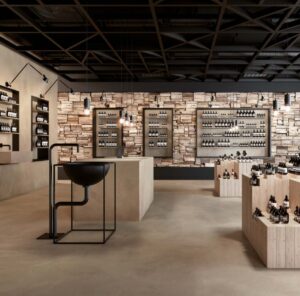 Do you have a preference for an industrial character? You bring the industrial appearance of concrete into your home with a large format concrete-look PVC tile that is subtly finished around the edges. Cement-bound resin floors naturally already have a stony appearance, which is reinforced by mixing two adjacent colors during application;
 - Prefer to bring the outdoor feeling inside? With terrazzo-look PVC tiles, a raw and robust effect is created that resembles scattered stones. Resin floors can also be scattered with flakes for this effect;
- A leather-look design is also among the possibilities on both floors. PVC tiles in leather look have a beautiful natural appearance that radiates exclusivity and class. On resin floors, an applicator can mimic a similar effect with dark leather tones (light brown, dark brown and black).
The biggest difference between both floors is the presence or absence of seams. With resin floors, no seams are visible and the sleekest effect is obtained. If you are charmed by the tile effect and find the application of a laying pattern (think of cross, diagonal, half-brick or quarter-brick bond) a nice addition for the interior, then a PVC floor fits better.
- Does a wood look appeal to you the most? A PVC floor in wood look is almost indistinguishable from real wood due to the realistic designs and relief effect. This effect cannot be realized in such detail with a resin floor. In addition, PVC strips offer another advantage. With strips in different widths, colors and shapes and the possibility to apply laying patterns such as herringbone or Hungarian point, you can truly go in all directions when creating your wood-look floor.
The durability of use
Both resin floors and PVC floors are manufactured from high-quality, durable materials with a long lifespan. This is consolidated because a protective coating is (almost always) applied to both floors. But as no single floor offers 100% protection against scratches, these floors also form no exception to this. Fortunately, scratches and other signs of use can be prevented to a large extent. Curious how? Then read the articles below:
> Tips for optimal preservation and fixing scratches on PVC floors
> Tips for limiting signs of use on resin floors
The user comfort
 If walking comfort is a factor of importance in the choice for a floor, PVC floors and PU resin floors are not inferior to each other due to their light-elastic, resilient character.
Do you also like to be warm and cozy? Then we also have good news: both resin floors and PVC floors can be executed with underfloor heating due to their low layer thickness and good heat conduction. (Those same properties also make the floors suitable for floor cooling!)
The price
The application of a resin floor generally involves more (pre-)processing than the laying of a PVC floor. This is reflected in the price. Target prices for cement-bound resin floors vary from €55 to €75 per m² (including application, excluding VAT), for polyurethane resin floors that is €75 to €85 per m². For PVC floors, the price per m² is about €45 to €55. Conditions apply to the above rates.
Resin floor or PVC floor: have you decided yet?
Resin floors and PVC floors share a striking number of similarities. The final choice is mainly a matter of taste. TREU interior specials is happy to help you select the floor with the right properties for your project. Want to know more?