
Little makes an interior as personal and unique as your own design or photo on the wall or floor. Photorealistic printing is therefore a popular choice in many commercial and public interiors. Bringing a photo or design to life properly requires a lot of specialist knowledge about material use, color reproduction, and printing techniques.
When can something be called photorealistic and how do you ensure that even the smallest details are printed razor-sharp?
Photorealistic printing versus non-photorealistic printing
In the field of custom-made printing, you can choose between a photorealistic and a non-photorealistic representation. The detailing of the colors defines the difference:
- Photorealistic prints are recognized as a photo and are built up from approximately 1,200 colors;
- Non-photorealistic prints occur when an image is reduced to a few essential elements and colors and therefore stands further away from the original, such as the iconic pop art of Andy Warhol.
Lifelike printing: what to look out for?
Photorealistic printing requires a professional eye. To realize a photorealistic representation where the (color) authenticity pops, a number of aspects must be taken into account. The end result depends mainly on the following factors:
 Material use. Each material has its own texture and specific finishing options. The highest sharpness is realized on smooth or short-pile surfaces;
 - Color reproduction. The gloss level of the surface influences the color intensity. If printing is done on a glossy surface, the color is more intense than on a matte surface. By adjusting certain colors at strategic places in the design, the desired color effect can be obtained on any type of surface.
- Printing technique. Not every printing method is suitable for photorealistic prints. Due to the multitude of colors in photorealistic prints, screen printing is not an option. After all, a separate roller is needed for each color the design contains. With sublimation – a technique mainly applied to curtain fabric – you do obtain a photorealistic quality and high colorfastness. The same applies to digital printing. Because no printing plates need to be replaced with the latter printing technique, this method is more environmentally friendly than traditional printing techniques. (Read more information about printing techniques here.)
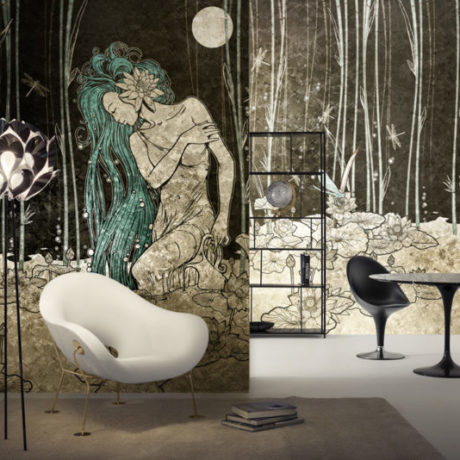
TREU is happy to think along with you about the various options to optimally realize photorealistic prints.
Make use of our 2D visualization possibilities
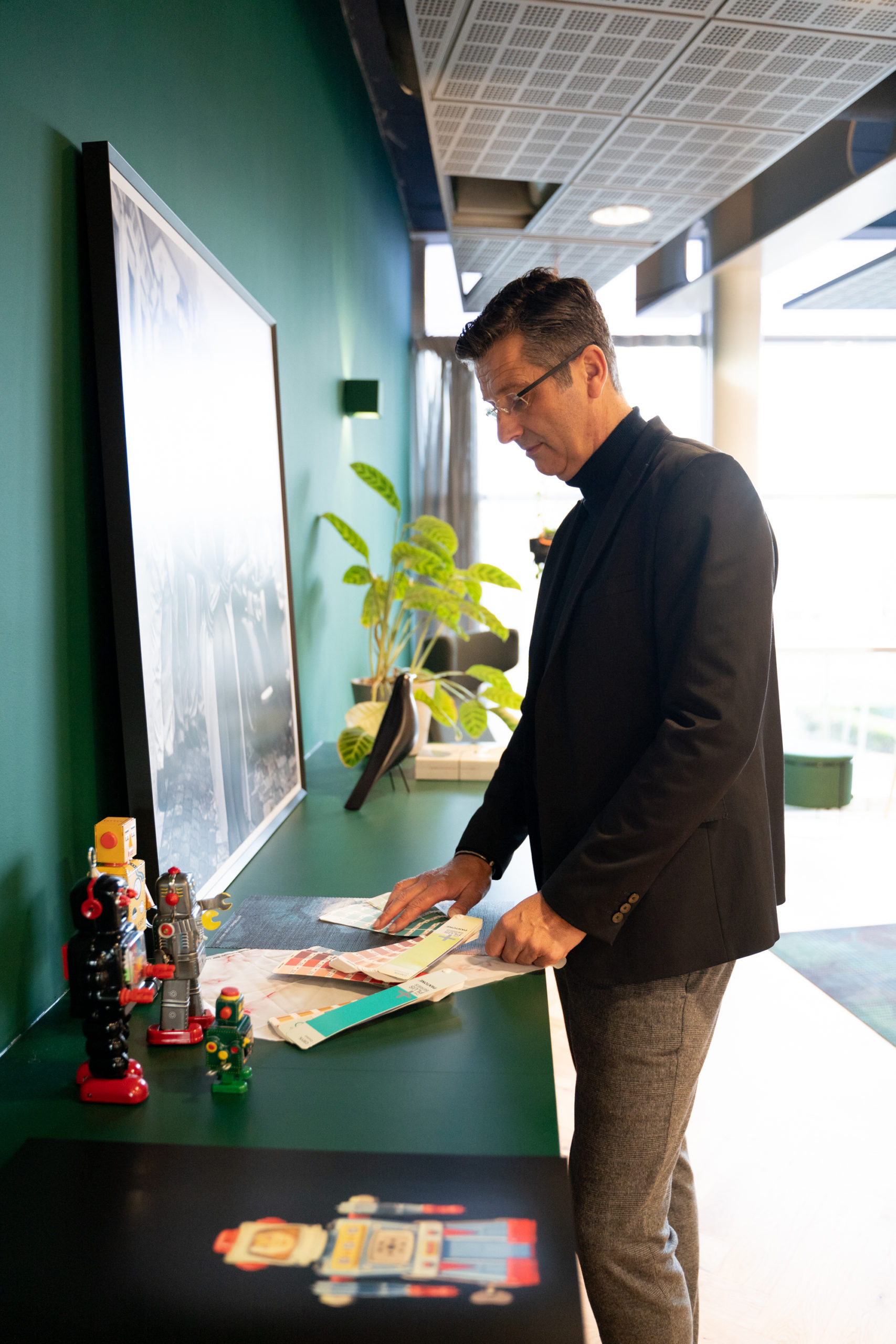 At TREU, we know how important it is to literally see an interior idea in front of you. We are happy to assist you with various 2D visualizations:
- With color fans, mock-ups, and visualization material related to specific product applications (such as the gradient flow in semi-transparent curtains), you get a clear picture of the many execution possibilities;
- We are happy to send you quality samples to experience the unlimited possibilities of our interior specials yourself. You will receive these within one week of request;
- Convinced of the quality? Within 10 working days, we can create a sample for you, so you get a very concrete image of the end result.
Go for a custom interior with photorealistic printing
TREU offers interior architects the possibility to have their own designs printed colorfast and razor-sharp on various interior materials. Also in small volumes. Your custom-made design thus comes to life almost three-dimensionally.
Whether you have a design, photo, artwork, or complete photo wall in mind, TREU helps you obtain the highest quality result at a very competitive price. The colors are fully coordinated with the materials to be printed. In short: with the wall and floor solutions from TREU interior specials, you create the custom interior you have in mind.
Want to know more about the working method? This is how TREU works.